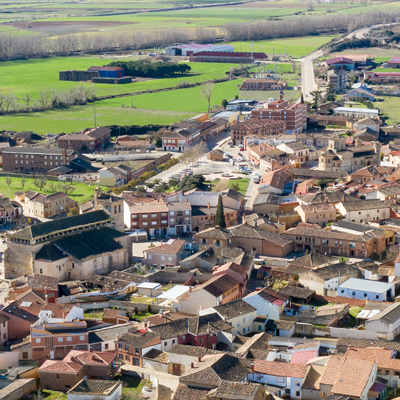
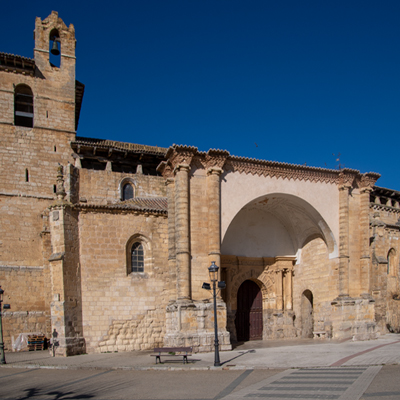
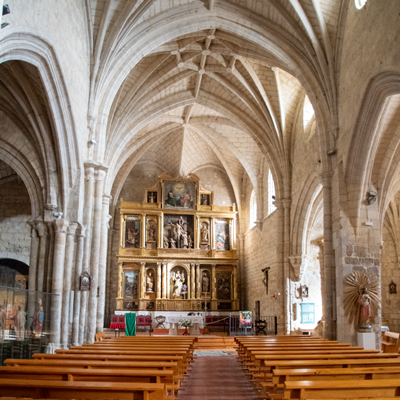
In the highest part of Frómista, where a fortress stood centuries ago, we find the imposing church of Santa María del Castillo, literally “Saint Mary of the castle”. This church, built in the 16th century, is a jewel of the late Gothic, a style which, although it coexisted with the rise of the Renaissance, maintained its love for purely medieval forms.
Construction began in 1530, and we know that the master stonemason Juan de Arce worked on it between 1547 and 1549, the years in which most of the building was probably completed.
One of its most striking features is its elegant and well-proportioned Renaissance façade. However, the tower that stands at the foot of the church is much more modern: it was built in 1705 and has its own façade, this time in a sober classical style.
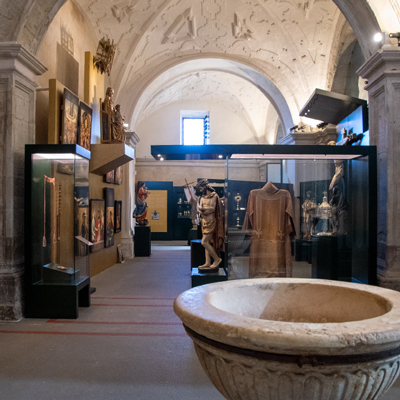
Although the exterior may look austere, the interior is a real surprise. Santa María is structured in three naves, all covered by spectacular stellar ribbed vaults, a display of the technical and decorative refinement of the Gothic style.
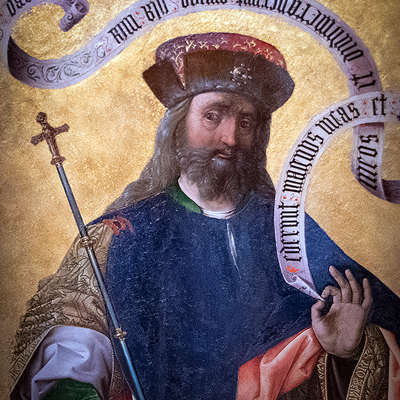
In its day, the church housed an extraordinary main altarpiece, composed of twenty-nine Hispano-Flemish panels of the highest quality. These paintings, the work of masters such as Salomon of Frómista, the Master of Los Balbases and Master Anton, depicted scenes from the New Testament, including the Last Supper, the Agony in the Garden, and the Crucifixion. However, the history of this altarpiece is marred by a deplorable event.
On the night of 10th to 11th November 1980, twelve of these magnificent panels were stolen. Everything points to the theft being the work of the famous international art thief Erik the Belgian. Fortunately, most of them were recovered, some in Brussels. Today they can be admired in the museum of the church of Saint Peter, where they have found a new home.
Currently, Santa María del Castillo is no longer a place of worship, but its history lives on thanks to ‘Vestigia, Leyenda del Camino’, a multimedia production that immerses visitors in the stories and legends of Frómista and the Camino de Santiago. This sensory journey uses lights, sounds and projections to bring the past to life within its walls.