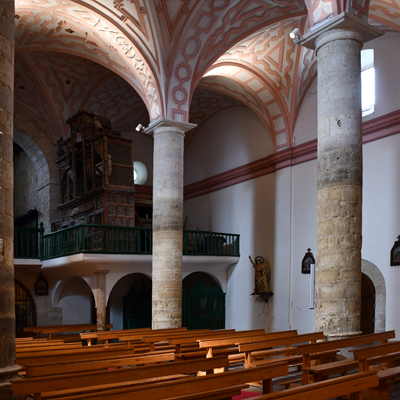
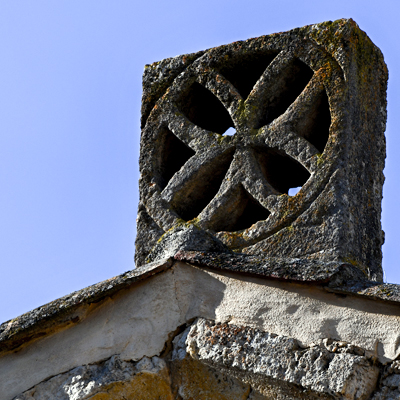
The parish church of Saint Mary Magdalene, patron saint of the town, stands at the top of Población de Campos. Its documented history dates back to the 14th century, although the current building is a 16th-century construction, the result of successive extensions and alterations that have given it the appearance it has today.
As with so many historic temples, the church has witnessed a number of transformations over time. In the 17th century, the chapel of Saint John the Baptist and a new tower were added. Later, between 1749 and 1753, major works were carried out that defined its current configuration. However, the church has also witnessed some difficult times, such as the fire of 1985, which damaged part of its structure.
Those who enter Saint Mary Magdalene discover a space where religious art comes to life. Among the most notable pieces is the 14th-century baptismal font, a work with centuries of history that has seen the baptism of generations of local people. Next to it is the 15th-century stoup for holy water, and several 18th-century Baroque altarpieces adorn the inside of the church.
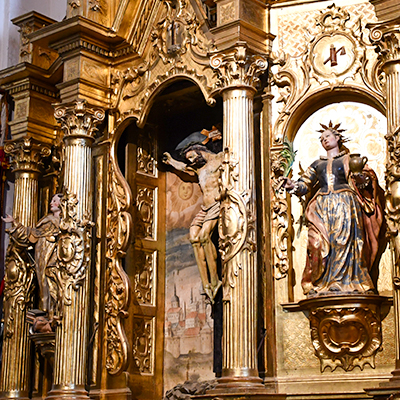
The main altarpiece is an absolute gem of Castilian Baroque, with its exuberant decoration and an interplay of light and shadow that captures the visitor’s gaze. It is presided over by an impressive image of Mary Magdalene Penitent, a work by the sculptor Pedro de Araujo dating from 1694.
The artistic legacy of this church stretches beyond its walls. The Diocesan Museum of Palencia houses an extraordinary panel painting from this parish: an ‘Ecce Homo’ attributed to the Flemish painter Jan Provost. Provost was one of the most prestigious artists of his time, active around the year 1500, and this work is a magnificent example of the mastery of Flemish painting, with its delicate use of colour and its profound realism.
Saint Mary Magdalene is more than just a church; it is a reflection of the history and spirituality of Población de Campos.